
The best public speaking tip ever
This is it. This is the big one. It’s the best, simplest advice I’ve ever heard about public speaking: Videotape yourself speaking and watch it.
That’s it. That’s the whole thing.
This is not new (title says best tip, not the most original), but most people are terrified of this and never do it. Well guess what – if you’re afraid to do it, how should your audience feel? Would you hire an accountant that doesn’t do their own taxes? Well, if you’re a speaker, you should, once in awhile, be your own audience.
We’ve all seen thousands of professional speakers, actors and presenters on tv and in the workplace making us all excellent critics of presentations. But what most of us lack is the most basic feedback on how we perform ourselves.
If you watch even 5 minutes of yourself presenting, you can catch:
- Lazy speaking habits, like ummms and aaaaws.
- Lack of eye contact (reading isn’t presenting) and presence.
- Body language issues and distractions.
- Moments when you’re confused by your own material.
- Energy level (do you seem to care about what you’re saying?).
- Personality – are you indistinguishable from a presentation robot?
Watch yourself and take notes. After you’ve caught things like above that distract you as a viewer, videotape yourself again – on the same material – with the goal of doing less of the above, and more or the things you did well. As you repeat the material with these things in mind, more and more of your material will come through. Still think you suck? Do it again and again and I promise you will get better nearly every time.
With the video, you can ask friends to review and give feedback – but pick your presentation minded, critical friends, not the ones who, like your Mom, will just tell you how great you were.
This requires no training, no special Powerpoint voodoo, just your willingness to swallow your pride for an hour or more. Believe me – your audience will appreciate it.
 This is a question I’ve thought about often (See
 It’s one continuous 90 minute shot.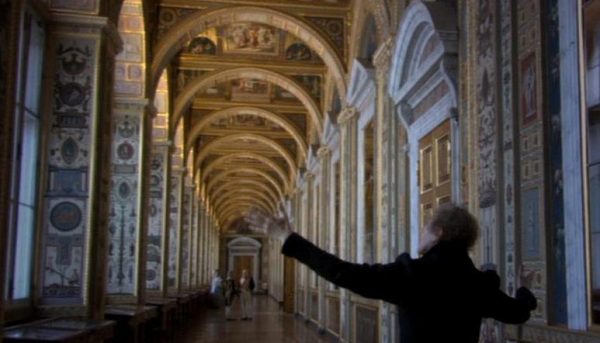

 This is in two parts: first, a quick and dirty movie review. Second, a short essay on
 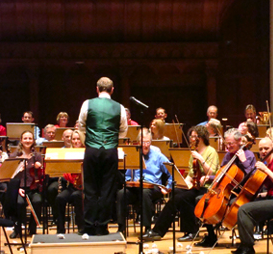 Boston Philharmonic and the RTO both threw parties on the same night, the RTO party would kick The Boston Philharmonic party’s ass. Why? Because the RTO vibe, as I read it, is free and open. They’re looking to experience more than to be perfect. Their rule set for what music is, and what it means, is way more open than any formalized orchestra could ever be.