How To Get Out Of A Bad Habit

I regularly take the the top voted question from readers and answer them in a post. With 62 votes, today’s winner was:

How Do you Get Out of A Bad Habit

There is plenty of advice today about habits and how to change them. I’m no expert, and you can find plenty of well regarded books on the subject. While the topic hasn’t reached mainstream knowledge yet, I hope it does. Our habits define who we are more than our dreams do. All schooling is an attempt to change students habits, but we are never taught how to change them on our own. The fancy word to know is metacognition, which means thinking about how you think. This is a key element in changing habits and many other things about yourself, as thinking about how you make decisions is exactly what you need to change your own habits.

A better question is: how to get into a good habit. Framed this way you have positive psychology on your side, increasing your odds. A goal like “I want to lose 50 pounds!” is far too vague and negative, compared to “I want to eat a healthy salad for lunch 5 days a week.” That second goal is specific, positive and thoughtful, and easier to achieve. Start by defining the goal in something you can do on a daily basis and that is positive.

We like dramatic goals since it’s easier to get initially excited by them, but they’re too abstract. Because of their grandiosity we feel worse when we’re not making progress, not better. It’s easier to quit a goal that feels impossible than one that’s merely about a small decision we have to make today.

1. Get your own data

If you have a bad habit you probably don’t realize how often you do it. Start by simply accounting for your habits. Exactly how many Oreos do you eat per hour? How many times per day do you check Facebook? Have a place, on a whiteboard or on your phone, where you mark down every time you do the thing you’re trying to do less, or more, of. You don’t have to change your habits yet: that comes later. But for now build in awareness of exactly what your current habits are.

You might be surprised by the patterns you find. And the simple act of recording it might motivate you to do it less. Maybe there’s a habit you don’t even realize you have that sets off the habit you want to change. Perhaps it’s the time of day when you have the most stress that the habit is most pronounced? Or when you’re with certain people? This is data about you that no book or expert can provide: you need self-awareness if you want to change yourself.

And by writing down every time you do something you’re teaching yourself an important skill: how to form a new habit. Without even changing the old habit, you’ve put a new, healthier pattern in place. Give yourself credit for how many days in a row you document what you’re doing. Writing things down every day is an easy habit to learn: we all had it in elementary school. There are plenty of mobile phone apps that help with this.

2. Find A Partner

We are social creatures and many bad habits involve other people to share them with. Find a friend who has something they want to change, and partner with them. Websites like stickk and 43 things make setting and sharing goals with friends into a game. This uses the forces of peer pressure to push you in a direction you want. Many of our most common bad habits are done socially (drinking, smoking, overeating), but so are many of the habits we want (exercising, volunteering, connecting). Think through who in your life most contributes to your bad and good habits and shift how you spend your time accordingly, or even invite friends that you share bad habits with to join you or your goal for a better habit.

Simply being around people who are engaged in habits you want to adopt will change your perception of the habit and of yourself. Many of our deepest habits are learned from the most intimate relationships we’ve had: our families. You will feel differently about the daily walk around the block you are proud of if the people you like spending time with take a daily 2 mile hike. You’ll naturally want to participate, and it will be a nudge towards a habit you want that will feel good, not bad.

3. Pick smart rewards, not just old ones

Many people use bad habits as rewards: an extra cupcake, a third beer, or a four hour TV binge. Think about things you enjoy that are entirely positive, where the reward doesn’t work against the very goal that earned the reward in the first place. Experiences, like going to the movies or a play, make for great rewards since they’re about an experience you don’t often have but probably enjoy and can look forward to. The concept of a cheat day makes sense in it sets up a controlled escape valve for natural desires to experience old habits, .

4. Choose alternative behaviors

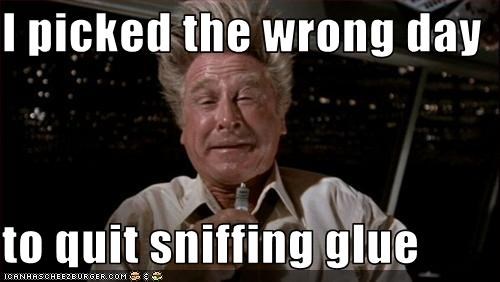
After you’ve made recording data a habit, you have to find alternatives. The joke of course is, like the Lloyd Bridges character from the movie Airplane!, it never seems like a good day to make a change. When under pressure we compulsively want comfort and that means our old habits.The mistake Bridge’s character made though wasn’t about the day he chose. It was about what his lack of forethought for feeling pressure to return to the old habit. He had no alternative, had no partner, and wasn’t recording data about what he was doing.

glue

This is where the practice from #1 and #2 above come into play. If you have a partner, odds are they’re not experiencing a craving for old habits at the same time that you are. If you reach out to them they can help talk you through the feelings you’re having and sort them out without using the old behavior. If you’ve been tracking your habits, looking at the last few days or weeks of data will remind you how much you’ve achieved so far, and inspire you to stick with it another day. You’ll be reminded it’s not just about the moment you’re in – it’s about the long term, and it’s the long term view that made you want to try changing your habit in the first place.

It’s best not to depend on willpower. No one really has very much of it. The basic notion of a habit is to be able to do something without much conscious effort. Use the  willpower you do have each day to do the simple things that will influence your behavior in the long run. It’s what you do each day that allows the natural pull of habituation to move you towards the behaviors and goals you desire.

Notes from World Domination Summit 2014

I speak Sunday spoke yesterday at the World Domination Summit in glorious Portland, Oregon. The event started Friday and it’s clear this is a most unusual event: there’s an energy that I’ve only seen a handful of times in the hundreds of events and conferences I’ve been to. It’s always a pleasure to speak to a crowd of 2500 people who are so engaged and willing to give energy back to the stage.

I decided to take notes during the many sessions and that’s the balance of this post.

I noticed even during speaker rehearsal that the crew was having fun and working hard, a magical combo of culture. When the organizers and volunteers are having fun and committed to making something interesting happen, it rubs off on everyone. When you walk into any of their venues the volunteers give you high fives and a big smile, which seemed cheesy at first, but it nudged me, and every attendee, towards being social, friendly and engaged.

The event was founded and led by legendary man of the world Chris Guillebeau and in his opening comments he explained the goal of the entire enterprise (which is now four years old) is to find answers to this question: How do we live a remarkable life in a conventional world? The event tries to answer the questions in different ways and through different activities, but all have three values in play.

  1. Community – connecting with interesting people
  2. Adventure – taking risks and doing new things
  3. Service – making the world a better place

Many of the 2500 attendees are solo entrepreneurs, small business owners, marketers and people with a passion for three goals above. Over 150 people work on putting the WDS event together. Most are volunteers including the core team. And it’s a non commercial gathering – there are no sponsors and nothing is sold other than ideas, and books from speakers.

The event opened by setting a world record for making a Yoga chain. More than 800 people joined in the hot Portland sun.

AJ Jacobs

I’m a fan of Jacob’s work: I read his excellent book The Year of Living Biblically (my review), where he spent a year trying to follow every rule in the bible, which turned out to be far more challenging, and in many cases, impossible than anyone expected.  He talked about this and his other quest books, explaining that he’s  not naturally brave, but he’s forced himself to be and its changed his life. There are three rules he tries to live by.

  1. Be bold
  2. be experimental
  3. be strategic

Jacobs mentioned that in many of his projects he’s learned that “it’s easier to act your way into a new of thinking, than think your way into a new way of acting” – Jerry Sternin (part of his theory of positive deviance). Sometimes you have to force yourself to do new things and only later will your thinking and feelings change.

He studied many historical figures and learned none of them achieved what they became famous for by staying home. They took risks and put themselves out there. Langston Hughes  was working at a hotel, when the famous poet Havel was staying at the hotel. Hughes slipped one of his poems into his room, and it led to his first break as a writer. As Hughes said, “[I] did not let my dream be deferred”. Jacobs had a similar experience when someone volunteered to be his assistant. The bible does condone certain kinds of slavery and Jacbos realized “The closest thing in modern times to slavery is an internship” so he hired him. That assistant would go on to write a successful book of his own.

Jacob’s latest project is about family. He received an email from someone claiming to be his 12th cousin. He learned about Geni, a website that has the largest family tree: 77 million people. He claimed that everyone on earth is 55th cousins or less. He pointed out this is bad news for bigots – when you look at the tree its harder and harder to make distinctions.

He’s trying to organize he largest family reunion in history – there will be a film (and I’d guess a book?) about the event.

Jadah Sellner

She opened by reading a poem she wrote a decade ago that began “I encounter every lesson in life on purpose” It was a personal poem about her life, her loves, overcoming abuse and… much more than I can explain without letting you hear the poem itself. She briefly told the story of the company she runs called  Simple Green Smoothies, (her bio) and offered rules she’s used to turn her at times difficult life around:

  • Say dreams out loud
  • Take imperfect action
  • Let go

She mentioned a research paper about the different systems we have: doing systems and thinking systems, and how we can only use one system at a time. She mentioned the habit many dreamer types have of coming up with a business idea, and a name, and buying a domain name for it, but never doing anything with it (and got most of the audience to admit they’ve done this themselves). She claimed this identifies you as a dreamer  And for every dreamer there is probably a doer out there, who knows how to develop ideas into businesses, but doesn’t have the vision or the idea. She’s interested in how to bring these behaviors and attitudes together.

She offered that dreaming big is hard as adults, and saying dreams out loud can have an unexpected kind of power.

To get to her current successful business shehad two failed businesses first. In July 2012 they started an instagram account for Simple Green Smoothies. It was more of a side project (e.g. an imperfect action). They didn’t even have a website. But just by focusing on one small, easy thing they gained traction and feedback to what they were sharing. It was strictly photos and recipes of smoothies. Only later did they create a website and the skills they learned at the previous businesses helped the third business come together.

She closed with five rules:

  1. Take consistent, ninja-focused action
  2. Stay insanely curious and see what sticks
  3. Court your community
  4. Create hyper-engaged connection
  5. Choose Love over Metrics

It was an inspiring talk – she’s a passionate speaker and the combination of an entrepreneur who’s comfortable reading her poems about her life was a most welcome surprise.

Gavin Aung

Gavin is a cartoonist, known for his website Zenpencis, He used to work at a boring corporate job, and although he had drawn for most of his he’d never tried to make it his full time profession. He noticed the rising web comics market and was aware of how the web had changed opportunities for creatives. He read The Art of Non-Conformity which asked two questions he took seriously:

  • What talent do you have that you can see yourself spending your life doing
  • How can you use that talent to help other people?

As illustrated in one of his most famous cartoons, he decided to quit and cut against the path he was on. He’d been reading biographies of great thinkers and began making illustrations of some of their most famous quotes. He put all his eggs in the basket of his cartooning and its what he’s been able to do full time every since. A book collecting some of his best work will be out this November.

Shannon Galpin

Women in Afghanistan don’t have a voice. In their courts women count as 2/3 of a man. Shannon works in Afghanistan on women’s rights issues. She offered some shocking statistics about womens issues

  • 14 million girls given away as child brides
  • 4 million girls and women sold into slavery
  • 237,868 women are raped or sexually assaulted in the U.S. annually
  • Around 60% of sexual assaults are never reported
  • (She didn’t provided specific sources)

She offered that these numbers are overwhelming and it’s easy to want to look away. But she explained that she, and her sister, are one of these numbers, and even victims an be apathetic, or feel motivated to turn away. It took her many years to find her voice and break her silence about what happened. The culture of silence needs to change.

“I always wondered why somebody doesn’t do something about that. Then I realized I was somebody.” – Lily Tomlin

She shared the story of a young rape victim who had photos taken of her while she was passed out, and that the images were spread widely on social media. There was a hash tag for it. But someone made a counter hashtag: #jadacounterpose. It’s an example of the power of voice. There is always a way to speak up.

She found her voice after visiting women’s prisons in Afghanistan. 50-80% of women in prison are there for morality crimes related to arranged marriages or for being a rape victim. She discovered an outpouring of stories, told faster than the translators could translate. No one had ever cared to hear their story before.

“I get up every morning determined to both change the world and have one hell of a good time. Sometimes this makes planning my day difficult.” – E. B. White

She offered that we have enough non-profits, but we don’t have enough citizens engaging. And two of her interest are mountain biking and street art. She loves how art in public places is unexpected. She uses public art exhibitions to change the stories people were telling and to draw people out.

She showed My body is not a democracy, which inspired her. It helped her decide to want to make art that compelled people to act. The Combat Apathy project, started in 2012, is her manifestation of this idea. It’s a blog, a program of exhibitions and more.

Michael Hyatt

Hyatt is an author and blogger, who writes about marketing and personal branding. He opened with a story about fishing and building model airplanes with his father, and his father would encourage him as he worked. His father changed jobs and became a traveling salesman, and when he was home he developed a drinking problem and became an absent father. Michael began drinking at 14. One day coming home he and his sister found his father passed out on the sidewalk, and was humiliated in front of his friends. He made a silent vow “I will never be like that”, but it was an overcorrection. In 1992 he found himself checked out from his own family.

He called this the drifting life – a life where you think you’re in control but you’re really not. People who are caught up in life’s distractions. People who end up in a destination they would never have chosen. He calls the driven life  the overcorrection. Both are unconscious approaches to life. He offers a third alternative called the designed life.

Later in life he heard his fathers story. He served in the Korean war and was seriously injured and went into a multi-month coma. He returned home, married Michael’s mother and had to find a job, without a high school education. He drifted into a career, making choices for sideways reasons.

He shared stories about his success and failures in life, that center on three questions:

  1. How do I want to be remembered ?
  2. What is important to me?
  3. What single brave decision do I need to make today?

Saki Mafundikwa

He’s from Harre, Zimbabwe and offered that he’s had many different careers, mostly related to design. His general philosophy is “jump and the net will appear”. Most of the beginning of his talk was about his culture. Everyone has a family name and a totem (or animal) name. Some people use their totem as their last name, and add an emphasis to it. He taught the audience several totems.

He worked as a graphic designer out of country and wrote the first book on African typography. He moved back to Zimbabwe in 1998 to open a design school. He called it ZIVA, which means design knowledge (I think that’s what he said). A major challenge is lack of funding. They’ve had to look within, as his travels to America for philanthropic projects to support what he was doing. He choose to build a curriculum based on African values and cultural traditions. They just signed a deal with AutoDesk to introduce 3D design to his country. In a country with an oral tradition, there aren’t as many written stories as there stories that are told, and part of their mission is to produce works that tell those stories.

DAY 2 / Sunday

Gary Hirsch

He started by talking about the monsters he was afraid of as a kid, and how his father told him to draw them. This was part of how he learned to express his feelings and develop the craft of making art. He asked two questions of the audience:

  • What’s one brave thing that you’ve done?
  • What’s one brave thing you want to do but haven’t?

He asked if anyone had a brave thing they wanted to do in front of 3000 people, and about a dozen people raised their hands. He picked a woman who wanted to teach yoga to the audience and she came up on stage. She had everyone simply touch their toes, and then told everyone they are perfect just how they are. Gary then gave everyone in the audience a bravebot, a simple totem for staying brave and helping you do your brave thing.

 Dee Williams

She is known for building and popularizing mico-houses. She talked about needing a shove to get started and that if we knew what to do, we would do it. But why don’t we? Sometimes we lack the courage to follow our heart. She pulled out a red blanket (stolen from Delta airlines), which she put on as a superhero cape. She had the audience practice standing in a power pose of a kind, standing like a superhero.

She grew up on a large lot in the midwest, with little parental supervision and she developed a sense that at any moment she’d become a superhero. Most of her interests were about the outdoors and spending time with animals and nature. She went to work for state agency working on the environment, but she wasn’t happy despite her success. At 40 she had a heart attack and she wears a pacemaker (defibrillator?) today. She was given 1 to 5 years to live and she realized she needed to act now. She decided to build a little house, 84 square feet, at a cost of $10k, and built it herself. She made mistakes at first (she glued herself to the house once) but she slowly learned the skills needed to do build the house she wanted.

Her utilities were $8 a month – her cell phone was her biggest expense. Simply by letting go of her own life she had flexibility and more control over her life. The little house lets her see more of nature: when it’s cold outside, the house is cold. She can hear the neighborhood birds. And most importantly, her life change has made her self-aware and more in touch with who she is.  “A new sense of problem solving evolves by simply showing up differently.”

She started a company to teach other people how to build little houses. And wrote a book about her life, called The Big Tiny. She’s designed what she hopes will be we retirement home, and it’s 54 sq. feet.

The way she measures success now is how she shows up, and how she shows up with her friends.

John Francis

In 1971 he witnessed an oil spill in the San Francisco bay: two oil tankers collided. He spent 17 years walking across America, and taking a vow of silence, in protest. He broke the vow on the anniversary of earth day and he broke his silence with friends and family. He said “Thank you for being here”. He’d learned much about communication from his vow and he realized how you can’t share a message if there’s no one there to receive it. He was surprised by the sound of his own voice, thinking perhaps someone else had said what he was thinking, and he started laughing about it.

“People are part of the environment” Then our first chance to influence the environment is how we treat each other. Human rights and gender equality are part of what influences the environment.

During his walk he decided to start painting. One on day during  his walk he found himself arguing with people about what he was doing, and chose to be silent for a day. He discovered how much more he learned by listening, so he stayed silent for a year. He kept a journal to go with his paintings, and showed photos from his journals. While he was silent he made himself go every day (silently) if he could make a portrait of them. He made powerful connections with people silently.

He arrived in Oregon and studied for a degree at a college in Ashland. They gave him two years of credit for work he had previously done (including 12 credit course in non-verbal communication). After he graduated he was accepted to the University of Montana, and it took him 2 years to get there by walking. He was a TA and taught without using spoken language.

He’d go on to work on environment legislation. He’d never have believed when he first decided to walk that it would lead to so many adventures and opportunities to make a difference and become a respected leader and influencer. His point was that you can’t ever really know what will happen or where things will lead, but having the courage to do something is essential.

Elise Blaha Cripe

She explained she dreaded being asked about what she did. Unlike being a smoothy maker or a sales associate (jobs she has had). They were easy to say, but none were what she wanted to be doing. She already had a blog and was selling things online through it. She wasn’t comfortable explaining it all and it didn’t feel real. She eventually came up with an answer: “I make stuff”.

Her answer has developed into:

  • I am a creative person
  • I design products
  • I sell handmade goods.
  • I teach workshops.
  • I write a great blog.

When she gets stuck on a project, which she often does, she admits she’s not an expert. It’s expected to her that she’ll fail. She considers herself to be an expert at the attempt.

“Great people do things before they are ready” -Amy Poehler

Failure is information. You use it and move forward. She has a one year old daughter and observes this all the time. Her daughter isn’t waiting until she learns how to walk to walk, she’s failing her way into learning.

She does many big projects and she calls them creative challenges. Her first was to decorate a playing card every day for a year. She learned that daily challenges are fun, hard and also boring, but she liked it and she shared he progress on her blog. She made it 10 months when she realized she was over the project. At 26 she decided to do 26 craft projects over 12 months.

For all her work she tries to leave space to grow. There has to be room to adapt. But there you also have to say it aloud and force yourself to confront how it feels when you do. Sharing your idea gets it on other people’s radar, to get an accountability partner.

She tweeted on day about wanting to start a podcast, hoping somehow a “podcast company” would magically respond with everything done for her. But what she did get was a response from a fan with a link to a webinar about starting a podcast. It changed her idea from an abstraction without any steps to a first step, which she took. The podcast launched this year.

She invited all of us to write down the think quietly (on special stickers that were handed out earlier), then write down our bold statement and share it today.

 John Jantsch

I spoke right before John and unfortunately didn’t catch most of his closing talk.  If someone took notes, leave a comment.

Photos from the event here.

5 Questions that decide if Facebook crossed the line

There are 4 points and 5 questions at the heart of the latest drama around Facebook and ethics, and the report of a recent experiment they did regarding emotions.

1. All media manipulates emotions by design

Newspapers editors have always chosen which news stories we see, choices made with emotional impact in mind. Television and print news have a long history of over-reporting stories of violent crime, far out of proportion to the rate they happen. One argument is the belief it’s easier to draw attention for negative stories. Another is that making people feel bad eases the challenge of selling them things in ads (See Do Emotions In Ads Drive Sales?). The news feed from any news source has always been editorialized, or in more cynical terms, manipulated. There has never been a news report that is purely objective, although some are more balanced than others.

Advertising by definition is “a form of marketing communication used to encourage, persuade, or manipulate an audience” (#). Television, print and web news generally depend on advertising for income. Any service you use that depends on advertising feels pressure on on all of their choices to help advertisers succeed in their goals.

2. Clickbait and headline crafting are emotion manipulations

News services choose which stories to cover and how to title them. There is a natural incentive to want stories to draw attention, and the writing of titles for articles is an important skill, a skill based on understanding reader’s emotions. Buzzfeed and Upworthy are notorious for their careful crafting of the title of the articles (The Atlantic reported on Upworthy’s successful headline style). The common use of puns (humor), tension (fear), and teases (curiosity) are all based on attempts to use the reader’s emotions to make them more or less likely to want to read the story. Headlines predate the web, and the history of newspapers documents yellow journalism, a practice still in use today.

3. Designers of most major websites experiment on their users

For more than a decade it has been standard practice for people who design websites to use A/B testing on unknowing users of a site. These experiments are done regularly and without any explicit user consent.  A designer’s job is to learn about user behavior, and apply their knowledge of humor behavior to help their employer with their goals through redesigning things. Any website that depends on advertising for revenue is designed with the goal of selling ads. This includes most of the major news services that have been critical of Facebook’s behavior, including The Economist, The Atlantic, The Wall Street Journal, The Guardian and The New York Times. All of them have likely done research on unsuspecting users regarding how design changes impact user behavior.

Most major software companies employ user researchers and user experience designers, people who study human behavior for the corporation. Many of these people are hired for their expertise in experimental psychology. Most formal experiments are done in labs with explicit participant permission, but as software world has shifted to the web, the formality of online user experiments has changed.

4. The Facebook news feed has always been controlled by an algorithm

At any moment there are 1500 possible stories Facebook can show the average user. Much like Google or any search engine, Facebook has an algorithm for deciding which of many competing links (or stories) to share with any user at any time. That algorithm is not public, just as the algorithm in the minds of any news editor anywhere isn’t public either. That algorithm is perhaps the greatest piece of intellectual property Facebook has, and it is something they are likely developing, changing, and experimenting with all the time in the hopes of “improving” it. It’s no accident Facebook calls it the news feed.

Just like any media source, improvements from Facebook’s perspective and a particular user’s perspective may be very different. However all sources of media have some kind of algorithm. When you come home from work and tell your spouse about your day, you’re using a kind of algorithm to filter what to mention and what to ignore and have your own biases for why you share some news and not others.

Facebook is a social network that by its central design mediates how “friends” interact.

5. The 5 questions that decide if Facebook crossed the line

Outrage is emotional itself. When we get upset, based on a headline, we already have confirmation bias about the story. None of us heard about what Facebook did from a purely objective source. We all entered the story the same way we enter all stories, with preconceptions of our own and influences born from the editor and writer.

Ethics gets grey fast once you get past initial emotions and dig in to how one practice compares to others. There is never just one bright yellow line, instead it’s a series of many gray lines, where the details make a difference. There are 5 questions that probe at the entire issue and yield perspective on what’s right, what’s wrong and what’s somewhere in the middle.

  1. Is it ethical to manipulate people’s behavior? Perhaps, but with media it’s a matter of degree. All communication has the implicit goal of effecting people in some way. All media organizations, which includes Facebook, have a combination of motivations, some shared by their users and some not, for the changes they make to their products. Advertising has strong motivations to explicitly manipulate people’s emotions and any organization that use ads are influenced by these motivations.
  2. Is it ethical to use design and experimental psychology to serve corporate goals? Probably. This doesn’t mean all experiments are ethical, but using experiments of some kind has long been the standard for software and technology design, and similar methods have long been employed by advertising agencies. There may be nuances that should be adjusted, but in principle research on human responses to media is standard practice and has been for a long time. In the pursuit of making “better” products, research is an essential practice. I don’t think Facebook’s Terms of Service needs to state anything specific about experimentation if the terms of service for news and media outlets that do similar experiments don’t have to either.
  3. Was there something wrong with explicit, rather than implicit, emotion research? The outrage may stem from this difference. Rather than they study being about increasing clicks, which has implied emotional factors, the stated goal was purely about influencing how people feel. This makes it feel categorically different, even if the methods and motivations are largely the same as much of the research done in most software and media companies. Plenty of magazines and websites have the primary goal of changing how you feel about a topic or issue (e.g. Adbusters). The results from the study were moderate at best – a tiny amount, about .1%, of influence was found. There are other possible issues with the study design, described here.
  4. Was there something wrong in doing an experiment at this scale? Maybe. If the study had sampled 20 people I doubt there would have been much outrage. Something about the scale of the study upsets people. The rub is that when your service has 1 billion users, a small experiment involves thousands of people (the study involved 689k users, less than 1%).
  5. Was it unethical to publish the results in a research journal? Possibly. On one hand research journals have specific protocols for participants in studies. But on the other hand, if it’s common for an an organization to do the experiment in private, why is it unethical to report on it? (I’m not saying it’s necessarily ethical, I’m just raising the question)

Why You Are Not Drowning In Data

[This essay appeared in issue #9 of Offscreen magazine]

We love to blame the world because the world can’t blame us back. I recently read Sarah Gooding’s article titled Drowning in Data: When News is Noise. She feels information overload makes it hard to cultivate creativity. It’s a sweet article and you should read it, even if I disagree. She writes:

It’s never been easier to be productive, but it’s also never been harder. With technology and a flood of information at my fingertips every time I turn on an Internet-connected device, my resolve crumbles.

There is a difference between how something feels and how something is. Of course life feels overwhelming at times. We all struggle to concentrate on what we want to now and then. But that doesn’t mean the world, or the technology in it, is accountable for our problems. Throughout history some people have struggled to be creative and to concentrate, while others haven’t found it to be much of a struggle at all. What explains the difference? I don’t think technology has much to do with it.

My theory is it’s best to think of information overload as a myth. As long as the things that distract you have an off switch, the problem isn’t the world, the problem is you. The world has always had far more information than we can consume, much less comprehend. The only thing that’s changed is our self-righteous stress in response to it.  Consider these situations:

  • When you go to a concert with friends are you distracted by the crowds around you?
  • When you go to a bookstore, are you overwhelmed by the books you see?
  • When you walk in nature, do the thousands of plants & insects stress you out?
  • When you breathe, does the abundance of air in the atmosphere around the planet worry you?

There are floods of information at our fingertips all the time, even when you go camping in the wilderness or when the power goes out in your apartment. The same arguments about how mobile devices or social networks are overwhelming could be made about anything on the list above. But we don’t make those arguments about anything other than technology and media. Why? Technology is an easy target. It’s easy to blame. It reflects our product centric culture that it is products, and not ourselves, that are the problem. We imbue technology with god-like powers which gives us the psychological crutch of blaming it first. But we forget only we turn the devices on and only we can turn them off. Gooding briefly mention The Slow Web, but even this puts technology in the center ring. Your mind should come first, always your mind. Our minds excel at tuning things out. We tune out an infinity of information all the time.

Much of our talk about information overload echoes the excuses of addiction. We complain that the web is trash, yet we complain about how hard it is to turn it off.  We crave, we habituate, we justify, and we get nervous and uncomfortable when we don’t get our fix. And when we fail and feel bad we blame the technologies, and the world, for our problems.   We wonder “why is there so much information? Who did this to us?” when the answer is always the person asking the question. We’ve been well trained to consume far more than we need. Our apartments and garages are filled with things we never use, yet we feel guilt in getting rid of them. Instead we want even more things. And we feel guilt there too, but not enough to change our behavior. It’s wise to ask who benefits from all this negative energy around consumption. It’s probably not you.

We consume information the same way: our inboxes and reading lists are several lifetimes long, yet every day we go out and chase more for no good reason at all. It’s a paradox: we fear missing out so much that we miss out. We are compelled to be information fiends, hoarding it, feeling shame over it, feeling dopamine rushes when we capture new batches, conquests that only repeat the same pattern. There’s really no reason to worry about reading all the books you own but haven’t read, yet we do. Speed reading is shallow reading, and we know, as Gooding points out, that we want depth over volume. The problem is very little of our behavior is in line with that goal. But if you can’t make your behavior align with your goals, whose problem is it? Nothing stops you from reading The Power of Habit, except, of course, your habits. Maybe useful books of self-awareness like it sit sadly in your queue, as you’ve forgotten it’s only reading books that helps your mind, not the buying.

Gooding writes:

The Internet is a black hole of information, sucking me in with its digital distractions.

Socrates never said “I’d do great work if I didn’t have philosophy overload from hanging out at the agora.” Emily Dickinson didn’t complain of vocabulary overload in the English language. Picasso, Da Vinci, Tesla and Marie Curie all possessed amazing curiosities and could have easily been distracted away from their work by the abundance of sex, food, conversation, money, news, books, and paintings in their lives. Yet they worked. They produced. Van Gogh was mad and starving and produced. Every generation has had its grand distractions. We forget ancestors painted on cave walls, as the struggle for survival didn’t stop their creativity. Bukowski was a drunk and a bum in nearly every sense of the word, yet wrote and wrote and wrote even more. With as little as he had, he sacrificed his time, and arguably his life, in the service of his ideas. What are you willing to sacrifice to create? If you don’t sacrifice something, it’s the creating that will be sacrificed for you. For our grandparents it was radio. For our parents it was TV. For us it’s the web. For our children it will be something else. There is always a justifiable distraction but history does not give you a pass for the ideas you let yourself get distracted away from.

As a writer I have days where no matter how much I want to work, I’m unproductive. I know it comes with the territory. I know my daily habits are a shield and my passion and love for ideas must fuel that shield and make it both stronger and more flexible. But I’m human and sometimes my habits fail me or I them. But I will never blame Netflix, or Twitter, or a phone, for the same reasons I would never blame the wind or the sky. It’s up to me to gain control over my mind. It’s my job as professional to take responsibility for both the inputs and outputs of my brain. It’s the willingness to work, over months and years, to make my mind an ally in my pursuits and not an adversary. But the first step is to stop blaming the information or the world. The world and the technology in it has never been the problem and as long as every device we use has an off switch, it never will be.

If you feel like you are drowning in data, stand up. Stand up for yourself and own your consumption. You’ll discover when you stand that you’ve been “drowning” in a kiddie pool all along.

Related:

hose

The doors of Paris: a photo essay

I spent a few days in Paris last week (to speak at USI 14). For fun I took photos of every interesting door I walked by. I didn’t seek out interesting ones with a plan. I didn’t want to be deliberate about it. Instead I chose to pay attention as  I walked through the city.

Doors fascinate me for many reasons. They’re ignored by most people walking past them, but to anyone who lives or works there this is their daily portal into another slice of their life. For many of these doors I wondered: who lives there? what are they like? What does this particular door say or not say about them?

Without any further commentary here are the doors of Paris.

IMG_0520

IMG_0516

IMG_0515

IMG_0513

IMG_0514

IMG_0698
IMG_0706

IMG_0601

IMG_0554

IMG_0527

IMG_0526

IMG_0517

IMG_0521

Back my next book on Kickstarter today

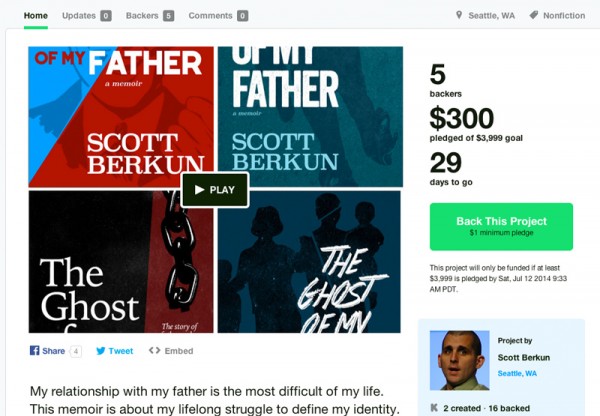
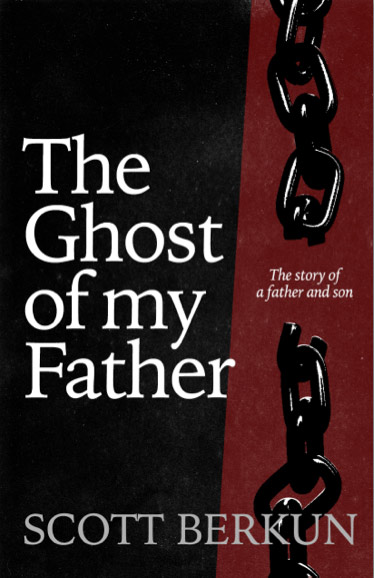
This morning I launched the kickstarter campaign for my next book, The Ghost of My Father. I’ve written several posts about the book over the last few weeks, and if you’re interested in the book now is your chance to be a part of it.

There are plenty of great rewards – if you’re a fan of my other books I think you’ll dig them, but of course the coolest ones are in limited quantities. Take a look now and I hope you’ll help me with my next project. Thanks.

The Ghost of My Father – now on kickstarter.

ghost-kick2

Results: What do readers want from author kickstarter projects

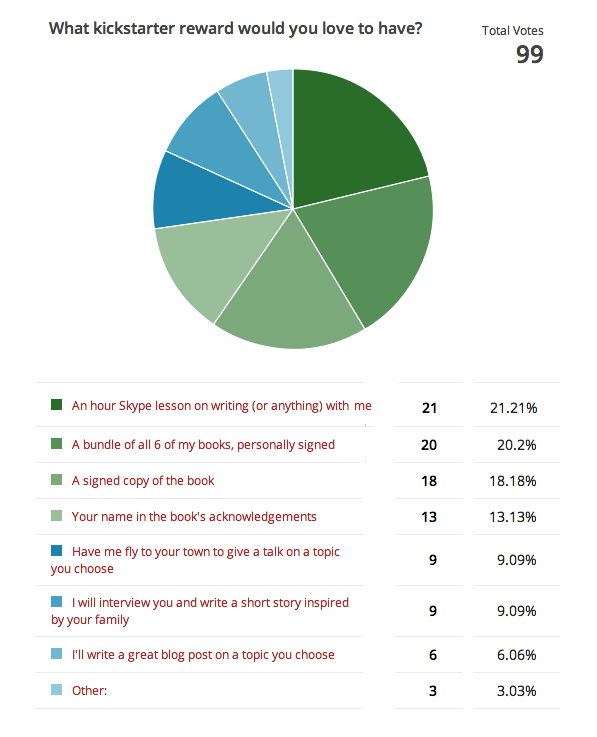
Thanks to everyone who voted last week about my upcoming book, The Ghost of My Father (background here). Here are the results:

kickstarter_ghost_voting

Results:

  • An hour Skype lesson on something,  21%
  • A bundle of all 6 books, signed, 20%
  • A signed copy of the book, 18%
  • Your name in the book’s acknowledgements, 13%
  • Have me fly to your town and give a lecture, 9%
  • Write a short story about your family, 9%
  • Write a blog post on the topic of your choice, 6%

No surprises here. Of course with no associated price tags, an hour personally with the author (me in this case) came in first place.  Curiously a signed copy of the book came ahead of items that are far more personal: writing something at the reader’s request.

About ten people emailed me to tell me they really just want the book. They don’t care about rewards and a reward is not going to make them decide to support a project they wouldn’t otherwise. I respect this opinion and often share it myself. However to run a successful kickstarter campaign requires appealing to different people who have different preferences. People who just want the book aren’t hurt by offering rewards to those who are willing to pledge more money, but want something special in return.

I’m sure different authors with different audiences will see different results than I did. But as I couldn’t find anyone who’d published survey data like this I though it useful to share.


Can technology reduce consumerism?

I regularly take the the top voted question from readers and answer them in a post. With 62 votes, today’s winner was:

Can technology reduce consumerism?

I am certain the answer is a 100% definitely maybe. I need to pre-order a grande soy latte from Starbucks on my blue-toothed iPhone 5 while driving in my series M BMW Coupe before I can think clearly enough to answer that.

Before I make up my mind, here’s a story. Recently I went on a twitter tirade (a twirade?) about consumerism, particularly how it relates to America’s struggle to conceive of solving problems without having to buy something first.

But a better definition comes from Wikipedia, which says: consumerism is a social and economic order and ideology that encourages the acquisition of goods and services in ever-greater amounts. Since the 1940s the amount of consumable goods America, and the world, consumes has risen dramatically. But is this bad?

It has been wonderful economically, certainly for America. WWII decimated the industrial capacity for Europe, making the untouched factories and infrastructures of American cities incredibly valuable to the world, and to the American economy. But it has also been bad for the environment, as having an economy that depends on consumer goods motivates the sales of more consumer goods that people could possibly need, particularly plastics, which has environmental consequences we may never recover from. Even seemingly progressive products like mobile phones depend on minerals and elements that are rare and are expensive to mine. Upgrading phones or laptops every three years, which is common, has costs that go beyond economics. On the personal level, the amount of debt the average American carries is higher than ever, spurred on by the cultural values of consumption and owning new products that contribute little to happiness, fulfillment or the needs people have.

“Advertising has us chasing cars and clothes. working jobs we hate, so we can buy shit we don’t need.”

― Chuck Palahniuk, Fight Club

But can technology, which is a form of product, help reduce these problems? No. Not directly. This may sound like semantic noodling, but only people make choices about consumption. The point of my tweet is the consumerist trap of believing we can’t do anything unless we have an app, a system, a product, or a program. If a person wants to consume less, they will. No technology is required to spend less, or to choose goods not on trends but on which will last longest. Buy Nothing day requires no tools or devices, just a willingness to try and spend 24 hours without buying anything.

Of course you can find iPhone apps that help with recycling or finding environmentally preferable products. Books are a kind of technology too, and there’s plenty to read about the subject of consumerism. Me writing this post on the technology of blogs and you sharing it (hopefully) via email and social networks are all technologies too. Any kind of progress, or regress, depends on technology in some form.

But I don’t see consumerism as a technological problem any more than I see poverty, unemployment, cruelty, warfare, and other forms of human self-destruction and hypocrisy as technological problems. They are social and philosophical problems. We have always had the ability to solve them, but not the will, the maturity, or most cynically, the capacity as a civilization to put our collective interests ahead of our selfish ones.

Once a person chooses, for themselves, to commit to something, technology becomes an asset. But the technology can never make that commitment for us, as we always have a way, in our moments of weakness, to turn off the machines (At least until we ask Skynet to take over).

[Note: I don’t drink lattes, nor drive a BMW, nor have an iPhone 5]

What’s the best kickstarter reward for a book?

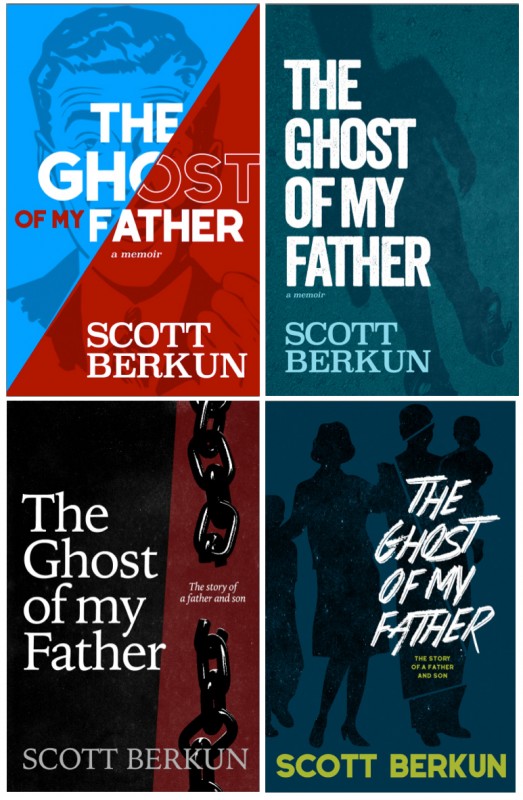
Ghost-4panel-coverI’m considering using Kickstarter for my upcoming book, The Ghost of My Father, a memoir about the most difficult relationship in my life. Using Kickstarter was a great experience for Mindfire thanks to all your support – I know many of you were excited about getting your name in the book and owning personally signed copies.
The audience for The Ghost of My Father is new as it’s a different kind of book. I don’t know that it will sell more than a few hundred copies. This makes using Kickstarter an even more desirable possibility as I can make sure those of you who are interested get something special for supporting this challenging project.

If you’re interested, what special reward would you love to get? What’s the best reward you’ve seen an author offer for a book project? You can write in your own suggestions too. Thanks.

Lessons from working on the 3rd draft (The Ghost of My Father)

The book in progress, The Ghost of My Father, is a memoir and it’s no surprise the process of writing it has been different than my other books. To help me sort out what I want to do and how to do it I’ve read dozens of memoirs and several books about memoir writing (recommendations post forthcoming). I thought I had a strong grasp of my own goals and the nature of writing these things. How wrong I was.

The funny thing is every book I’ve ever written has a moment where I realize how wrong I was. That’s part of the journey of writing. You have to possess a certain madness to believe you can take on something as big and unknown as 300 blank pages and shape it into something other people will want to read. For all of my books there has been a point like this, somewhere late in the middle of the work, where it hasn’t all fallen together yet in the way I want and I naturally wonder if it ever will.

The thing I’ve learned is when any creative work isn’t falling together yet it means something bold has to be done. Usually it’s concision: removing something big to give everything that remains the space it needs to blossom. Sometimes it’s shuffling: changing the order in which things are told. Other times it’s far more subtle, and I need to write a new beginning for the book that has better aim for carving through the rest of the material. For most of my books the first chapter that appears in the published version was written from scratch late in the process, to my dismay each and every time. The original first chapters, as hard as I’d worked on them, no longer fit the book they’d started. Maybe if I fill that shelf, I’ll have enough abandoned first chapters to make a book out of them.

This week I’ve been reading through the entire 2nd draft of Ghost. It’s the draft I’ve had 5 people read and give feedback on. I call these sessions where I read through the entire manuscript The Big Read. It’s a big deal psychologically and I force myself to do it. Rewriting and revising is far more fun than reading drafts. I’m convinced it’s worth it as reading the whole manuscript is the only way to put back into my brain what the book actually is at the moment. Books are big and my brain is small. Without rereading the whole thing I’m working with my imagined idea of what the 2nd draft is, which may be pretty far from what it really is like. Reading the entire draft also lets the feedback I’ve heard from others land properly, as while I’m reading I can see for myself where the feedback is accurate, or not, and make notes accordingly as I go. As strong as the urge is to jump to the computer and fix things, I resist. I want to wait until I’ve experienced the whole thing before I change anything.

As I’m reading the 2nd draft I’m noting the problems I find. Some problems are structural: why is this section before that one? Why is this story even in the book, but not this other one? How does X fit with Y, if at all? Other problems are craft: underwritten paragraphs, overwrought metaphors, experienced told but not shown. Craft is far easier to fix than structure. Craft is polish and you can revise a book, even a deeply flawed book, into polished writing. Some excellent books are structural disasters with craft so fantastic you barely notice (I’m looking in awe at you, Mr. Updike). But structure, pace and tone, things that have to line up throughout the entire narrative, are far harder to get right or to experiment with.

I have a novel I’ve worked on now and then for years. I once decided to switch the entire book from 3rd person to 1st, a task I decided could only be done by typing in the entire manuscript again, shifting the point of view as a I went. Some experiments and changes can only be tried at large scale. That’s the burden of long narratives like books, or films. The upside of books, and all writing, is you can always go back. Unlike a painting or a sculpture where a bad choice is irrevocable, in writing you can always go back. Writers should be brave in revision for this reason: there’s always a safety net, so be bold.

It took until I was halfway through this big read that I understood what I needed to do for Draft #3. And as much as I want to dig in right now and get busy, I won’t do it. I need to know if these plans I have now, at the halfway mark, will still hold together when I’ve read the whole thing. As soon as I hit publish on this post, I’m going back to the read. I’ll report back when I’m done. Have a good weekend.


Feedback wanted: redesign sketches for scottberkun.com

For the last two weeks I’ve been working with designer/developer Ryan Sommers on a redesign for scottberkun.com. I asked you readers for feedback on the current design a few weeks ago, and wanted to post again with an update.

Here are three concepts we’re working with. Have a favorite? I want your input since it’s you folks who will be looking at this new design for the next few years :)

The redesign goals included:

  • Make the visual styles coherent and cleaner
  • Make first choices for visitors easier
  • Prioritize interactivity through Ask Berkun and comments
  • Emphasize conversions to the mailing list 

These concept sketches just show the basic design choices – the details, copy, sidebar, etc. haven’t been decided yet.

Concept C

Concept-C2

Concept A

Concept-A2

Concept B

 Concept-B2

You can vote for your favorite, but leave a comment if you have suggestions or commentary. Thanks:


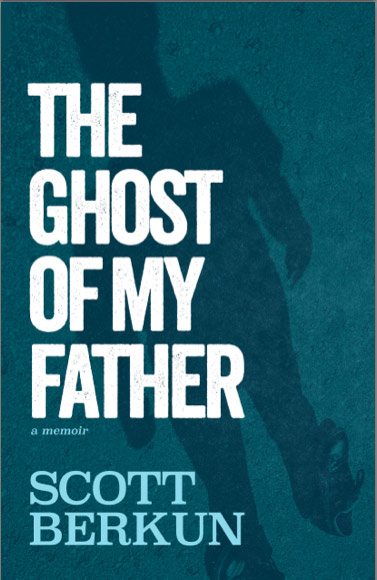
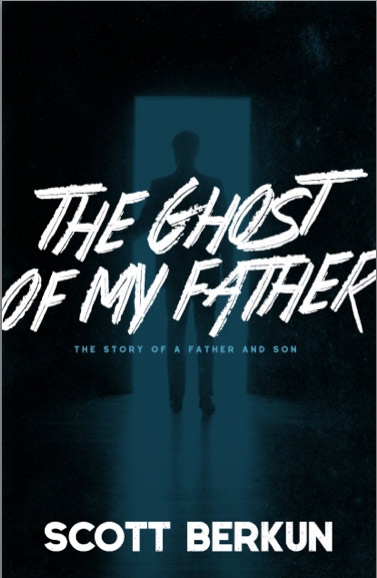
Vote on The Cover of My Next Book

Today I’m working on the third, and likely final, draft of my next book. For this project I’m again working with designer Tim Kordik (see our previous work together for the Mindfire cover). He does great work and I love his approach to creativity and design.

The book is titled The Ghost of My Father. It’s a memoir about the most difficult relationship of my life. It’s a departure from previous books and I hope you’ll follow my lead. You can read previous posts about the project if you missed them. Please join the special email list for the book to be first to know when it will be available (and get early excerpts and other insider surprises). It will be a self-funded independent production and I can use all the support I can get.

Today I was thrilled to discover Kordik sent along his first round of concepts. While these are not final designs, I’m happy to let you have an early look and give your opinion. Just vote for the design direction you think is most promising (again, these are first rounds, not final designs). Leave a comment if you’re so inspired and I’ll read them all.

(For fun, you can see all the previous covers and titles readers have voted on)

Concept E

Ghost-6

Concept D

Ghost-5

Concept A

Ghost-1A

Concept B

Ghost-1C

Concept C

Ghost-2

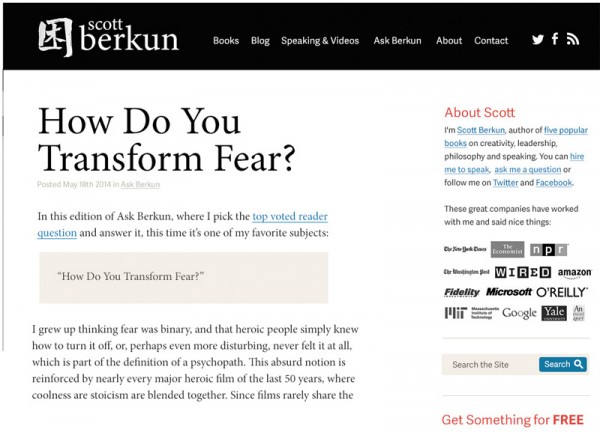
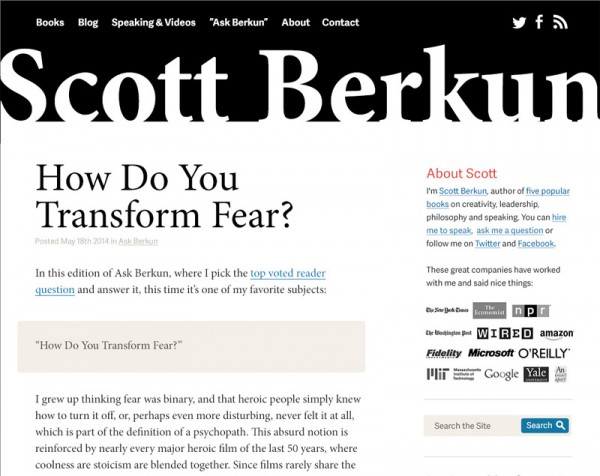
How do you transform fear?

In this edition of Ask Berkun, where I pick the top voted reader question and answer it, this time it’s one of my favorite subjects:

How Do You Transform Fear?

I grew up thinking fear was binary and that heroic people simply knew how to turn it off, or, perhaps more disturbing, never felt it at all, which is part of the definition of a psychopath. This absurd notion is reinforced by nearly every major heroic film of the last 50 years, where coolness are stoicism are the defining characteristic of the main character. Since films rarely share the interiors of character’s minds we can’t know what these characters felt, if anything, as they faced their enemies alone. It’s implied they were so brave they didn’t feel fear, but that’s a mythic lie. Read any non-fiction book about any great hero in any arena and the stories are fundamentally different as far as emotions are concerned.

bezzola-heebThe great lesson I’ve learned about fear is that courage is being afraid and doing it anyway rather than the absence of fear. This demands having a relationship with fear, or more precisely a relationship with the fears inside us. We all fear different things in different ways and without exploring those fears, where they come from and what kinds of bribes they take, we can’t have interesting lives. The people who seem the most victimized by fear are often the ones who’ve spent the least time trying to understand it, or the ones most lost in the heroic mythology of attractive psychopaths with guns charging confidently over the hill towards certain victory.

The only way to learn courage is to do something you’re afraid of. This is obvious but fears are emotional, not rational. Children learn by doing what they fear and it’s how adults learn too. Perhaps you start small and increase the stakes each time. Only then can you compare how the fear before doing the thing compared to the feeling of actually doing it and finishing it.

It’s rare for anyone to say, in retrospect, “that was much scarier than I thought it would be.” Generally we say the opposite. Why is that? It’s because fear is a kind of imagination. Our fears can instantly invent amazing vivid worlds of danger and disaster. And since fear is irrational it is not bound by logic, reason or knowledge, even though real life is. Therefore you can’t usually overcome fear with rational thought alone: it’s mastery of your emotions that matters more. It’s telling that the scariest thing for most adults is simply to share how they really feel with people they know. We’ve afraid to explore our feelings which creates a natural trap for us, since fear is emotional.

Comparing the fear you felt before doing something with how you feel afterwards is the tool for transforming fear. It’s only through that comparison, again and again, that you grow more confidence in deciding you’re going to do the thing anyway. You have to have some other feeling you’ve developed that you trust more than the fear. It could be love, hate, anger, passion, commitment, friendship, just about anything. Sometimes I do scary things purely out of self love: I want the future version of me to look back and say “wow, I did that. If I could do that, then I can do this.” And on it goes. It never ends. I know I will never run out of things that scare me that I should probably do, which means I need to continually re-experience the cycle of being afraid, doing it anyway, feeling good and then finding something new to be afraid of.

But this process is personal and that’s where people fail. We want our discoveries of ourselves to come directly from a book written by a famous stranger we admire. Or through a course or a lecture. We want transformation to happen without any risks or pain. These expectations are consumerist traps: no one in history became more confident simply because they consumed something. You only become more confident by doing things where you, as an individual, are exposed to truths about who you are. TED talks are consumption. Books are consumption. Listening to your adventurous friend, who seems so brave, talk about jumping out of airplanes, or running with the bulls, might briefly inspire you, but it’s still just you passively consuming a story from someone else that makes you feel good in some way.

Part of the fallacy is the belief that fear goes away. That once you’re brave and you’ve done something scary you’ll never fear it again. This is part of that heroic mythology again. If you read interviews with the greatest performers, whether it’s musicians or athletes, they’ll tell you they feel fear every time they get on the stage or the playing field (See Attack of the butterflies). It’s a romantic illusion that anyone is stoic enough not to feel any fear at all when doing dangerous and risky things. What’s impressive about these people is they’ve cultivated ways to manage their fears, to work with, under, over or around them, to achieve amazing things. I’ve always found FDR’s quote “There is nothing to fear but fear itself” strangely recursive: if you have fear, and fear fear, then aren’t you worse off? Being afraid of fear is precisely the problem. We presume if we’re afraid there’s something wrong with us or what we’re doing which is nonsense. What Churchill meant is not to give in to fear. We can’t be primarily motivated by it.

Nietzsche had this notion about energy, and that a person who could convert positive and negative energy into fuel would be the most powerful kind. I figured this out for myself on the basketball court, learning that when I got angry over a bad play I’d ruin the next play too. My response to a mistake was to increase the odds I’d make another one, the worst kind of response. It was only by learning how to use that anger to help the next action, say by using the anger to run back faster on defense, that I could convert that energy into something that helped me rather than hurt me. When I read it in Nietzsche it confirmed something I already knew: that the work of self discovery was to learn how feelings of hate, love, anger, joy, jealousy, and even pride can be fuel that you can direct in ways that help rather than hurt.

Years ago I read in the excellent book Brain Rules that the biology of fear and excitement are similar. In both cases our good friend the amygdala prepare our bodies for something interesting to happen by opening blood vessels, raising the heart rate, and adding adrenaline to the hormone mix. But the amygdala is too primitive to have notions of good or bad, exciting or scary. It’s our conscious minds that apply the labels afraid or excited. If you think about it many of the most interesting moments in our lives are combinations of fear and excitement: it’s not one or the other. Our bodies are built for fears from 10000 years ago, when our lives were at stake in every moment. So little of our lives involves anything with these kinds of risks anymore, but the amygdala hasn’t figured that our yet. This means when there is fear in your heart there is opportunity too, if you’re willing to do the work to find it.

LITANY AGAINST FEAR

I must not fear.
Fear is the mind-killer.
Fear is the little-death that brings total obliteration.
I will face my fear.
I will permit it to pass over me and through me.
And when it has gone past I will turn the inner eye to see its path.
Where the fear has gone there will be nothing.
Only I will remain.

– Bene Gesserit Litany Against Fear – From Frank Herbert’s Dune Book Series

[This topic partially inspired by a Facebook comment by Heather Bussing. Here’s a related article she wrote]

Redesign: How can my website better serve you? An invitation

It’s time to redesign scottberkun.com. Yay!

I’m looking to hire a designer to work on a redesign of scottberkun.com and have my own list of goals and issues. But before I go too far I wanted my make sure I invited you readers, the people this site is for, to speak up about your suggestions, complaints and things you wished the site did better.

Here’s my primary list of goals:

  • Coherent style: too many incremental  changes have been made over the years to fonts styles, colors, and highlights. The base text color should be black, and the various styles should be simplified and coherent with each other. It needs to be resorted from scratch and return the focus to easy readability.
  • Make first choices easier: There are 1500 posts and essays in more than 20 different categories but good luck finding them. There are also more than 20 full lectures you can watch, but good luck there too. The home page helps little, offering no framework for working by category or offering an easy first set of choices. I write about so many subjects it’s hard to find a way in if you’re not already familiar with my work. There is a best of berkun page, but it’s also hard to find.
  • Prioritize interactivity through Ask Berkun and comments: I’d love for this to be an anchor of the site, as it’s interactive and lets you readers drive the show. But it’s invisible in any of the navigation. Comments and requests fuel my work. The more engagement I get, the easier I find it to be productive.
  • Thoughtful conversions:  as a writer there are 3 actions that I benefit from the most: selling books, getting hired to speak, and getting people to follow me on twitter, the mailing list or Facebook. The site is intentionally not designed to hit visitors over the head with these three things, but without any  conversions there is no website. I’d like these three actions to be more prominent, but in a way that feels natural, not forced.  I have tons of free chapters, checklists  and resources, but they’re not tied to conversions in any direct way and they could be.

But these are my goals and I’m not the customer here – you are. Any comments, critiques or requests welcome.

What do you want more of? What do you want less of?

Cheers and thanks for reading.

Min / Max Note Taking for Conferences

As part of my recent talk about getting the most from events and championing ideas, I mentioned a brief theory on how to take notes. I presenting an updated version as the closing session of An Event Apart Boston and wanted to share the advice here.

I call the theory minimum effort for maximum value, or Min / Max Note Taking. The theory is simple:

  • You won’t remember much in a week – Human memory is poor and is not as reliable as we believe. Events compress many sessions back to back which puts even more pressure on our cognition. With each session that goes by you remember less and less about everything.
  • You won’t return to the slides – slide decks are often poor references for talks anyway, since if the speaker does a good job they used the slides to support their talk, rather than the other way around. Slides help most if you know what you’re looking for.
  • You need to capture brief reflections TODAY – while you are at the event, while your brain can still provide value to the future you about what there was to learn from the event.

For each session, commit to doing the following:

  1. When a session ends, immediately make a list of 5 bullets per talk. It doesn’t matter what they are. They can be negative statements, positive statements, quotes you want to remember or even questions you asked or want to ask. If you write a good short list it will guide you later for how the slides or other materials might be useful. Write for the future version of you, the you that will be alive a week from now, who will forget much of the context you have in the current moment. Be kind to the future you.
  2. Use breaks and lunch to catch up and summarize. Use the first or last  5 minutes of schedule breaks to jot down your list. Lunch at conferences is often 90 minutes long, easily granting you 10 quiet minutes towards the end to review the sessions so far and write summaries.At the end of the day, before you go out to social events, take time to summarize each session if you didn’t during the day.
  3. Consider how to make good advice you heard actionable. In the abstract some ideas and tactics sound great, but may not apply to your situation (or to any real world project).
  4. Consider taking notes on paper. For creative topics there’s value to being able to hand draw diagrams or relationships between concepts. When you write with your hand your brain processes the information differently, and there’s even evidence you will remember written things better than if you typed them.
  5. Annotate links and references from the talk: URLs alone don’t help much as you won’t remember why you want to go to them. Make a thoughtful note you’ll understand a week or a month in the future for what problem that link or book will solve.
  6. Post your summary on your blog (& twitter with the conference hashtag) – Invite other people to compare their notes to yours. They’ll contribute things you missed and you’ll learn from how their summaries differ from yours. It’s ok if your notes are short: they will still be very useful to people who didn’t bother to take notes at all. Being social accelerates learning: we are conversational creatures and it’s in the discussion about a session that you’ll learn the deepest lessons. If no one is inviting you to start a conversation about what you heard, start it yourself. If you do this during the event it will even help you meet new people at the event (including speakers, who may respond to the questions in your notes about their session).
  7. Share a one page summary at work: a one page summary is more than enough to let coworkers know if they want to learn more about a session (in which case you can point them at the slides or the speaker’s website). One page is also enough to validate for your boss why it was worthwhile to pay for you to go (or perhaps to pay for you to go next time).

This is the best, simplest approach I’ve seen. Of course note taking is highly personal, but I hope this short guide will help you figure out what works best for you.

Related:

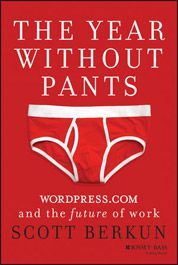
Why Culture Always Wins (An Excerpt from The Year Without Pants)

[This is an excerpt from The Year Without Pants, An Amazon.com best book of the year]

Chapter 4: Why Culture Always Wins

YWP-sidebarA great fallacy born from the failure to study culture is the assumption that you can take a practice from one culture and simply jam it into another and expect similar results. Much of what bad managers do is assume their job is simply to find new things to jam and new places to jam them into, without ever believing they need to understand how the system—the system of people known as culture—works. Much like the frustrated moron who slaps the side of a TV when it stops working, taking action without understanding the system rarely helps.

A favorite example of this tragic management habit is how in 1999 the famous design firm IDEO was featured on ABC’s popular Nightline TV show. They demonstrated an idea development technique they used called a “deep dive” to redesign a shopping cart in just five days. Soon hundreds of companies were doing their own half-baked versions of deep dives, and, surprise, the results were disappointing. Somehow, despite how dedicated some were to following all the steps and all the rules, an element was missing, and they couldn’t match the results they’d seen on the show. The missing ingredient was, of course, the primary one: the people involved. Watchers of Nightline worked at places with employees who were not as talented in design as IDEO’s. But beyond their talent, IDEO employees shared values and attitudes that were not explicitly captured in the deep dive method despite how essential those things were for the method to work. In anthropology terms this superficial mimicry is called a cargo cult, a reference to the misguided worship of abandoned airplane landing strips among tribes hoping for the goods airplanes had delivered to return.

Every year new trends in work become popular in spite of their futility for most organizations that try them. These trends are often touted as revolutions and frequently are identified with a high-profile company of the day. Concepts like casual Fridays, brainstorming sessions, Lean, Six Sigma, Agile, matrixed organizations, or even 20 percent time (Google’s policy of supporting pet projects) are management ideas that became popular in huge waves, heralded as silver bullets for workplaces. The promise of a trend is grand, but the result never is. Rarely do the consultants championing, and profiting from, these ideas disclose how superficial the results will be unless they’re placed in a culture healthy enough to support them. No technique, no matter how good, can turn stupid coworkers into smart ones. And no method can magically make employees trust each other or their boss if they have good reason not to.

The best approach, perhaps the only approach, is an honest examination of culture. But culture is harder to understand than a meeting technique or a creativity method. And culture is scary because unlike techniques, which are all about logic, culture is based on emotion. Few people have the skills to evaluate, much less change, a culture, even if they have the courage to try. It’s far safer to simply wait for the next trend to come along and rally behind it, hoping the excitement for the new method distracts everyone from noticing how little impact the previous method had.

In my story so far at WordPress.com, every employee I met was smart, funny, and helpful. They’d invested heavily in tools and systems but put the onus on employees, even new ones like me, to decide how, when, and where to do their work. These attributes of culture didn’t arrive by some technique sprinkled around the company years after it started. How did it happen, then?

Read the rest of the chapter 4 in the free PDF or read the entire first chapter.

Praise for The Year Without Pants, an Amazon.com best book of 2013, includes:

The Year Without Pants is one the most original and important books about what work is really like, and what it takes to do it well, that has ever been written.”
Robert Sutton, professor, Stanford University, and author, New York Times bestsellers The No Asshole Rule and Good Boss, Bad Boss

“The underlying concept—an ‘expert’ putting himself on the line as an employee— is just fantastic. And then the book gets better from there! I wish I had the balls to do this.”
Guy Kawaski, author, APE: Author, Publisher, Entrepreneur, and former chief evangelist, Apple

“If you want to think differently about entrepreneurship, management, or life in general, read this book.”
Tim Ferriss, author, New York Times bestseller The 4-Hour Workweek

Read more than 140 amazon reviews and consider buying the book.

A Critique of “Don’t Fuck Up The Culture”

I enjoyed Brian Chesky’s recent post Don’t Fuck Up The Culture, where he proclaims to the employees of Airbnb the importance of culture in everything they do. I like Airbnb and it’s nice to see a founder emphasize culture.

But there’s sloppy thinking at work here (see: mistakes of writing about culture). The first problem is there is a field of study of culture: it’s called anthropology. When business and technologists sling the word culture around as if they invented it they get themselves into trouble. Modern start-ups are worthy of cultural study, but to use that small sample in ignorance of a broader view of culture is myopic.

Chesky wrote:

Culture is simply a shared way of doing something with passion.

No. That’s certainly a nice sentiment but it’s not a definition of culture. A proper definition is something like: culture is the willing behaviors and beliefs of a group of people. Many cultures are not passionate, or certainly not passionate primarily about work. It’s implied that these behaviors and beliefs are things people practice by choice, but that’s a mild denial of the role of hierarchy in culture. Most human cultures depend on leaders to define, modify and reinforce the behaviors and beliefs of the group.

This means a CEO or founder has tremendous power regarding culture. They are the only person who can:

  • Fire anyone
  • Hire anyone
  • Decide how/why people are rewarded
  • Decide how/why people are punished

And with those 4 powers, every CEO is in fact a Chief Cultural Officer. The terrifying thing is it’s the CEO’s actual behavior, not their speeches or the list of values they have put up on posters, that defines what the culture is. Without these four powers any employee at the company is along for the ride in a culture driven by someone more powerful than they are. By the time the first handful of employees are hired, the culture already exists whether anyone realizes it or not. The people with the most power to fuck up the culture are simply the ones with the most power.

And of course the most vocal challengers to most cultures are the first to be shown the door. It’s in human nature to want to eliminate the most disruptive people. And it’s also human nature to want to bring in more people that fit in well. Repeat these two behaviors over time and culture becomes homogeny, even if everyone still believes the culture values diversity. Is the culture still the same at that point? Everyone still there might believe so, but the people who left because of the culture don’t get asked their opinion.

Of course a democratically inclined leader will delegate the above powers in thoughtful ways, and invite more people to play leadership roles, including people who are disruptive in positive ways. But unless the CEO can be elected out of CEOship, the entire culture is at best a benevolent dictatorship, not a democracy where the culture of power can be changed. How power is distributed has a primary role in defining culture, and that distribution must inevitably change as a company grows.

The thing that will endure for 100 years, the way it has for most 100 year companies, is the culture.

There is no company that has the same culture today that it did 10, 20 or 100 years ago. Cultures often change dramatically as they shift from birth, to immature success, to full maturity (and of course the vast majority of companies die before they even hit adolescence). Study the history of HP, Ford, IBM, Microsoft, or even Google and Facebook, and this observation is revealed. You have to do careful study to filter out which cultural values remained immutable over time, if any at all. Ask the first ten employees to leave a successful company why they left, and many will answer “the company changed.” Which is fine: it probably needed to change to continue its success.

The culture is what creates the foundation for all future innovation.

This is partially true, and partially a denial that it’s also culture that eventually becomes the single biggest resistance to innovation (and any kind of change). Any tradition, no matter how noble in its inception, eventually becomes the primary force of resistance against new ideas. Again, study the failure of any once great company: often its the powerful defenders or the status quo, under the guise of culture, that accelerated their demise (“that’s not how we do things here”). That is why culture is tricky, as you want pride in the past, but want it tempered so it doesn’t hold you back from progress. The champions of the last war may not be the best leaders in the next one, but who decides who the leaders are? Only the leaders from the past have that power.

Our next team meeting is dedicated to Core Values, which are essential to building our culture… After we closed our Series C with Peter Thiel in 2012, we invited him to our office. This was late last year, and we were in the Berlin room showing him various metrics. Midway through the conversation, I asked him what was the single most important piece of advice he had for us. He replied, “Don’t fuck up the culture.”

Thiel is right, but his observation isn’t particularly helpful. Nearly every organization ruins its culture in some ways, even if it does amazingly well. It depends on what culture you prefer: risk taking or stability? scrappy or luxurious? When an entire company fits in a van it has one vibe, when it barely fits in a stadium, it has another. And more importantly we’re talking about corporations, not orphanages. Once a major profit source is found the goal is to exploit that profit for as long as possible. Thiel’s quote doesn’t acknowledge the presumption that shifting from discovering how to profit, to maximizing (or at least increasing) profit is what a corporation is built for. That shift demands dramatic changes to the culture. Even a simple thing like significantly improving the wealth of employees changes the culture.

The very notion of Core Values, a declaration of cultural philosophy for an organization, is a standard move from the corporate playbook. The existence of a list of values has limited bearing on how often they’re practiced (e.g. the ten commandments). As mentioned above, the behavior of leaders defines culture more than anything else. I’m sure Enron and WorldCom had the same basic values handbook most corporations do, describing how angelic, smart, collaborative and honorable everyone is supposed to be. Platitudes are cheap to produce and put on posters in hallways. What’s missing from these handbooks is a test. How do you know your Core Values are actually being practiced?

How To Test The Value of Core Values:

  • Can an employee say NO to a decision from a superior on the grounds it violates a core value?

Try to imagine it. Would a cultural value from your corporate handbook ever be used in making an actual decision about actual work? If the answer is no, then the values are platitudes, or were written so generically that they’re easily overlooked or easily manipulated to justify just about anything (depending on your opinion, Google’s don’t be evil is either a good example or a bad one).

Culture is critically important and I’m glad Chesky is bringing it up. If he’s a good leader and manager he’ll invite his staff to challenge him on the values he defines, and how the proclaimed values are tested.

But there is a presumption among many executives that culture is an asset created and managed like technological resources, which is a mistake. Culture is emotional. It is based on trust and even (platonic) love between people. It is hard to describe culture rationally or in the same easily measurable terms the business world operates on, which explains why so many attempts by business leaders to control and scale culture ultimately fail.

You will also like reading:

Life Under Surveillance: Snowden, NSA and America

I frequently take the the top voted question from readers and answer it on the blog. With 64 votes, today’s winner was submitted by Imran:

Life under Surveillance: Issues and Options?

Edward Snowden will go down in history as a hero. A quick look at the history of The Pentagon Papers and the story of Daniel Ellsberg reveals easy comparisons. Just like the legacy of presidents, we are bad at evaluating the long term impacts of leaks, revelations, scandals and whistleblowers. With every year that goes by we’ll see a continued shift to his positive recognition. I know many people call Snowden a traitor and in many ways he is. But there is no rule that says you can’t be a hero and a traitor simultaneously. Remember that all of the American founding fathers were traitors. The very idea of whistleblowing is defined by betraying the system in power, yet it is a primary way major corruption is revealed. As painful and risky as it is, if it succeeds in generating enough attention it is a rare forcing function for change. If Snowden came back to America I’d likely support the filing of charges against him but also hold him up as hero: they’re not mutually exclusive.

Regarding life under surveillance, personal technology made it unavoidable as surveillance is the business model of the web. The only surprise is we’re living in A Brave New World and not 1984. We are willing and mostly happy participants. That’s the funny thing about most dystopian movies: they underestimate what we’re willing to accept in the name of convenience. Every week we hear a new story of people being fired over Facebook posts or tweets, or stories of credit card numbers and passwords being hacked, and mostly we just shrug. On a personal level we don’t see the stakes as being very high, and we don’t have an understanding of how surveillance undermines any notion of democracy or republic based government. We don’t think through how it impacts journalists, and how central journalists are to protecting our freedoms. And it’s hard to grasp the reality that when certain things are taken away they won’t ever return.

On the positive side, republics like the United States are sleeping giants of consciousness. Americans are a sluggish bunch when it comes to caring about what’s going on in the world or even the daily business of how our governments run. But every now and then an issue that has been slowly weighing on the collective consciousness slides to the forefront, and we have unexpected and dramatic change. 17 states now support gay-marriage, a staggering number given how long this issue has lingered and been debated in America. When American values truly shift, the politicians feel it under their feet and change their stance accordingly. The question is what exactly has to happen for that ground to shift for Americans regarding surveillance, whether it’s privacy from corporations or true freedom of information from the government?

The rub with surveillance is, unlike most social issues, there are huge corporate forces benefiting from surveillance in one form or another. Political issues like legalizing marijuana, or reducing discrimination, are complex enough without the direct line to profits lurking in the center of protecting information about citizens. That’s what I find terrifying: when the interests of government and corporations align against citizens.

 Are American people okey-dokey with NSA’s data dragnet?

The short answer is yes. Awareness of NSA’s behavior has not led to the formation of a political movement. A major contribution to the acceptance of the NSA’s actions is the feeling of fatalism many Americans have about government. They’re so detached from how it works they’ve long given up on it representing them or responding to their concerns. Snowden’s disclosures were a wake up call, but it was too abstract. It revealed generalities of abuse, not specific and emotional stories of how a family or a neighbor had data about them used against them. Most of us have a hard time connecting the dots to what our lives will be like if we don’t fight for these policies to change. There will need to be other, louder, more personally resonant, wake up calls before enough Americans rally around demanding stronger safeguards for the government’s access to data about its citizens.

[Update: Ellsberg commentary on Snowden]

Web designer wanted for work on scottberkun.com

Hi folks. I’m working on a minor to moderate redesign of scottberkun.com and I’m looking to hire a freelance designer to work with: I have ideas, rough sketches and beer (and of course money to pay you).

You don’t need to be a unicorn, as I’d likely hire the good folks at 10up to do the development work. But if you are unicorn enabled that’s nice too as maybe I can hire you for both.

Here’s how to apply:

  • Ideally you’re a fan and know some of my work (don’t fake it if you’re not – maybe I can make you one after we work together)
  • Point me at a single URL to your portfolio
  • Tell me your favorite mythological creature (make one up if you prefer)
  • Tell me what your rates are
  • Tell me something that sucks about the current design
  • Email the above to info at scottberkun.com

Thanks.

When My Parents Separated

This is a brief excerpt from a draft of my next book, a memoir about my family.

When I was 8 years old my parents separated. While cleaning out my father’s car, My Mom discovered movie stubs for a film she hadn’t seen. He left a few days later. When he left, much of the energy in our house went with him. Not precisely because he was missed, but more that everyone’s energy went inward, away from each other. We all found our corners in that house and those corners became familiar places. my Mom would smoke in the basement, trying to escape the pressures of raising three kids on her own. My brother, sister and I still played together and did the things kids do, but we never talked about was going on. Or what it meant. Even when my parents reconciled three years later, and my father moved back in, we’d often stay in those well worn corners we made.

I was far too young to understand what was happening or what it meant. Kids have no context and can accept almost anything. It  strikes me as curious how adults worry about what children will think of certain ideas, images or world news. It’s often the parents fears that are being protected, not the children’s. Children don’t have the taboos adults do. They don’t know being naked is wrong or that certain words can’t be said in front of certain people, and for good reason: what we find offensive or fearful is cultural, not biological. In many ways it’s all just invention. Children are far more accepting and open minded than they get credit for and often they can see things more clearly than their parents do. The question is how brave parents are in giving their children the chance to choose for themselves. Before my father left, my parents had a family meeting where they told us what was happening. This was the right thing to do and I’m glad they did it, but it was beyond my comprehension. My brother remembers it well, but I don’t recall it all: what I couldn’t understand never registered as a memory.

As an 8 year old I didn’t know any other families well. I certainly didn’t know any other fathers.I didn’t know my aunts or uncles or how they related to their kids. For me at age 8 whatever happened in the Berkun household was simply how it was. I had the sense it was uncommon for parents to separate or divorce, but those concepts were far too abstract to understand. In 1st grade I remember my friend Craig crying outside the P.S. 169 schoolyard, feeling sad and alone because his parents were getting a divorce. We all comforted him, but none of us, including him, had any comprehension of what it meant. We vaguely knew it was sad from what we’d gleaned about mentions of divorce on TV or in the movies. But we didn’t have the imaginations to comprehend the scale of the feelings involved, or that it could take years or a lifetime to sort them out, if he or his parents would sort themselves out at all.

During those separated years I did know that my mother, who I loved and knew loved me, was often very sad. And my older brother, who I loved and knew loved me, was sad in his own way too. But I don’t remember feeling sad myself at the time. I was a happy kid. I loved the freedom of the streets and the parks of our neighborhood in Queens. The separation distracted everyone away from me and in that gentle neglect I was free to roam and learn to love independence. Except for my family, those years were good years for me, with friends, and laughter and the discovery, for the first time in my life, that I was good at many things. Most of the pain in our family floated above and around me, like clouds of dust, annoyances to be avoided, but things you knew would pass by. I know now my arrogance was born during this time. I felt a kind of pity for everyone. I felt sad for them. I thought I was immune from it all, that somehow I was made of superior materials. I wanted to help my Mom, and I did all my chores. I wanted to chip in and help make it work, not knowing what ‘it’ was or how ‘it’ was supposed to be. Perhaps all boys feel themselves immune to fears and sadness, I certainly did. It wouldn’t be until many years later that I’d begin to understand the real wounds you suffer are the ones you’re the last to notice. The ones you’ve practiced so well at covering that you don’t feel them anymore.

Among those wounds was the curious absence of my father. It was strange, though I didn’t comprehend it at the time, that I spent more time with him alone during the separation than I did before or after. After my father moved out he scheduled monthly outings with me. He’d pick me up at the house and we’d spend the afternoon seeing a movie or playing miniature golf. Sometimes my brother and sister came, but in my memory often it was just my father and I. Did my brother and sister come less often, or were those outings simply less memorable? I know that when it was the two of us, we didn’t talk much. We hadn’t shared many interests, and he was, as most men during a separation would be, an unhappy man, but out we’d go. Then when I was 11 and he moved back into the house, those outings stopped. I don’t know why. We never talked about it. We all fell into a new routine and the years flew by. My father and I wouldn’t spend another day alone together for almost twenty years. It was almost as if on his return he became just another passenger in the family, sharing the same physical space as the rest of us children, following along on a journey of home life led quietly, and without acclaim, by my mother.

[You can read more about my next book here: Why Fathers And Children Don’t Get Along]